
Movement for Medical Moms Who Are Already Exhausted
Plus: Florida great-grandma attempts murder-suicide; Frustrated D.C. parents to get school bus trackers; Disabled doctor in Korea finds purpose in giving back
Before I popped my earbuds in, a bro-y voice came over the gym’s sound system, confidently explaining how to get fit.
“You gotta want it!” he exclaimed. I rolled my eyes.
I am a policy nerd. I’m not a fitness expert. Perhaps I shouldn’t even try to give advice on this topic.
But it’s a New Year and many folks have new fitness goals. Medical mamas also have unique barriers to this activity. I certainly have struggled with it. Despite working at a fitness center all four years of college, I never found an exercise routine I actually stuck with.
Until now.
As a 42-year-old, I have finally found a routine that has me exercising regularly and making significant strength and cardiovascular gains. I haven’t lost a pound. I don’t think anyone has noticed that I look different. But every time I leave the gym, I feel nine feet tall and after a few days without it, I’m itching to go back.
What changed?
Well, in a nutshell: You gotta want it.
Find your motivation
When I say “you gotta want it,” I don’t mean “you have to make yourself want it.” I mean “you have to find out what you want and do that.” Find what you enjoy, and make movement part of that.
What are you missing in your life? What would you get off the couch for? Maybe it’s friends, maybe it’s dancing, maybe it’s nature. Whatever lights you up is what will keep you coming back to it.
I discovered I want a lot of things — and together those motivations are what keep me going back. (None of them are the traditional “look better in a bikini” so if that’s not your motivator, that’s OK.)
I’ll be honest, my initial motivation was fear. Fear is a powerful motivator. As I aged and my son grew, he got too heavy for me to carry. The thought that we could be in a burning building and I would have no way to get him out was eating away at me. One of my motivations was to be able to leg press our combined weight so that I would know I could carry him on my back.
I hit that goal with a personal record of nine reps of 260 pounds on Dec. 19, less than three months after I started. One of the things I have been most surprised about is how little time it takes to see results with consistency.
What I do
My routine will certainly not work for everyone. This is not a fitness plan, but a permission slip to find what works for you. I’ll explain it here as an example, but look for what is missing in your life and build a routine around that.
I only go to the gym two or three times a week. I go whenever I have a spare two hours — roundtrip — which in the medical mom life is inconsistent. (I’ve tried classes and too often I can’t make it.) Being able to leave the house is important. (I’ve tried floor routines but my house is too small and loud — and people and pets need too many things too often.) Being outside is nice. But too hot, too cold, too rainy or too anything can kill my motivation. (My gym is affordable due to the Active & Fit Direct program — check if your health insurance has something similar on their website.)
The first 20 minutes, I’m on an elliptical listening to LOUD, FUN, EMPOWERING music. I cannot stress enough how a good playlist can make or break a session. My strides per minute on the elliptical are 100-120, which is not fast — and that’s the point. I actually have to slow myself down if I get carried away with the music. I’m just warming my muscles up and going for a nice GABA-A release — the calming, regulating effect that comes from steady, consistent bilateral movement.
Next, I do six to nine weight machines, which takes about 20 minutes. There are pictures and instructions on every machine if you don’t want to use a coach. I started with low, easy weights then pushed higher with each session that I was able to do at least 10. I haven’t had any injuries. These days, I only do one set to failure — the point that I can’t do another rep with good form — and keep track in a note on my phone. The weight at which you “fail” pushes your muscles to the breaking point so they can rebuild stronger. It’s been fun to see my progress in little numbers that go up.
Then, I change my playlist to something a little more chill, go to the mat and do whatever stretches feel good for about 10 minutes. One thing adults don’t get to do enough is roll around on the floor. Try it. It’s actually fun and your body will reward you with happy chemicals.
Finally, I head to the hot tub and sauna. Yes, there are days when the thought of getting warm is the biggest reason I show up!
Gear
Good gear can make the process more enjoyable — enjoyment equals motivation. I used these items as small rewards, only buying something new after I showed up for a session. You don’t need these items, but if they are helpful, these are my Amazon affiliate links.
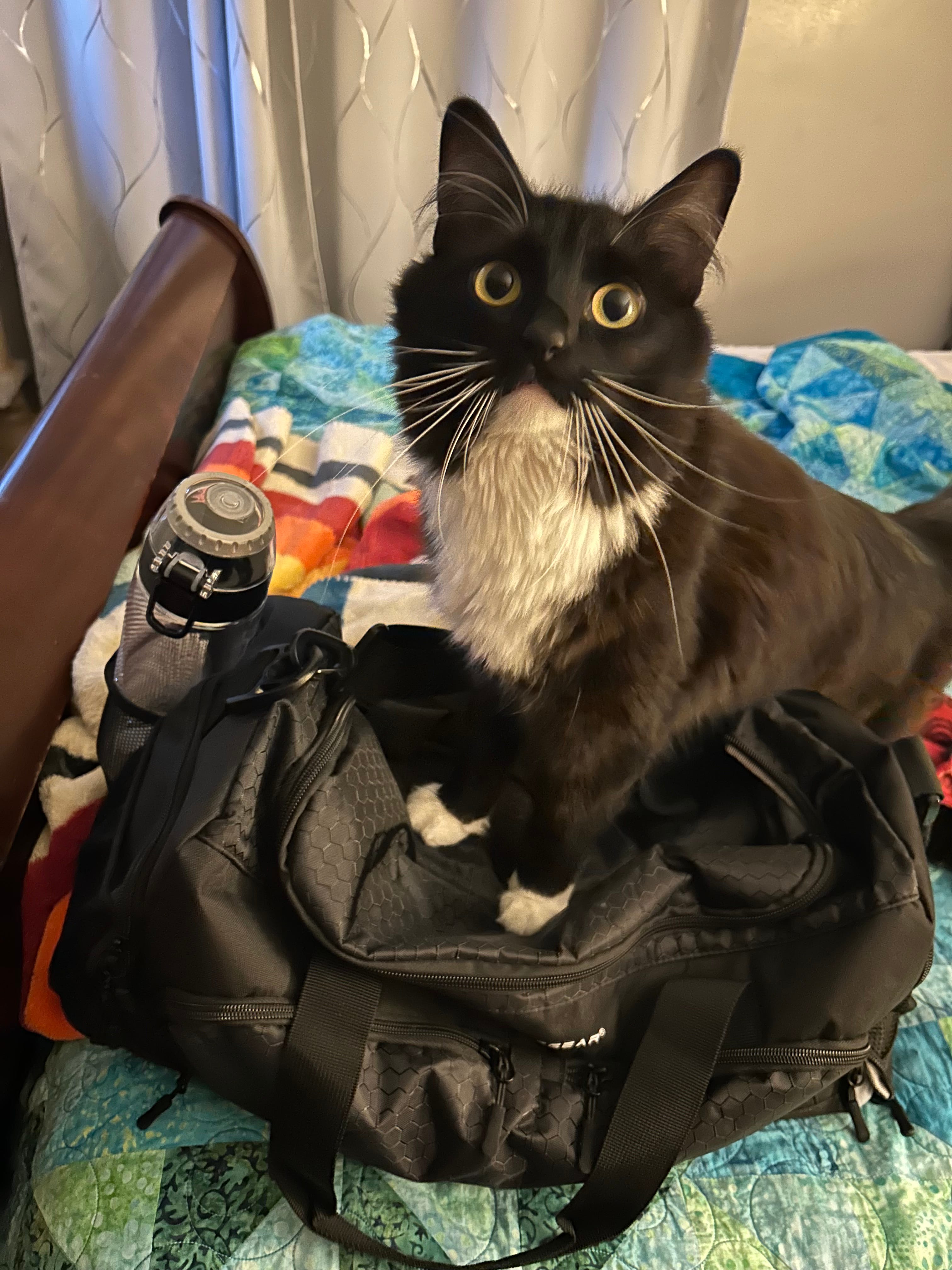
Gym bag: I like this one because it has a pocket for everything.
Mesh top: I don’t like to sweat. This top is cute and I love the length.
Yoga pants: These have pockets on the side for your phone, a feature that I now consider essential.
Shower shoes: These have tons of holes and dry quickly.
Water bottle: It is very durable. (Ask me how I know….)
Athletic shoes: I don’t have a link but I found Pumas at Costco for $28. Steal!
Do what works
As a medical mama, I don’t have room in my life for one more “should,” one more “have to,” one more “ought to.”
When I found ways to make it fun, enjoyable and not too hard, that’s when I started showing up consistently. Building consistency and confidence in your routine is much more important than “pushing” yourself. I wish for you a movement method that feels fun and enjoyable. I want you to want it.
Because fear is a powerful motivator. But so is love.
My New Year’s resolution is to make more short-form video! Be sure to follow Medical Motherhood on TikTok, Facebook and Instagram.
Medical Motherhood’s news round up
Snippets of news and opinion from outlets around the world. Click the links for the full story.
• From The Washington Post: “No-show buses, long waits: Will GPS finally help D.C.’s disabled students?”
Jennifer Lewis and her family have built their lives around the uncertainty of their daughter’s school bus schedule.
Lewis and her husband, Josh, both 49, wake up at 4:30 every school morning, about three hours before the bus is scheduled to take 15-year-old Kate, who has multiple intellectual and physical disabilities[…] Then, because of the bus’s unpredictable arrivals, they make sure at least one of them is home during a two-hour span every afternoon in case Kate arrives early, on time or late — all possibilities on any given day. Earlier this year, Josh quit his federal government job after a 27-year career in part to make that easier.
The Lewises are among the thousands of D.C. families who have a child with disabilities who takes a bus to and from school each day. Families say the trips are often made harder because of frequently erratic arrivals and undependable communication from the district.
This month, the Office of the State Superintendent of Education [OSSE], the agency required by federal law to transport students with disabilities from home to school and back again, said it had agreed to a one-year, $2.1 million contract with Tyler Technologies to create a GPS system that will allow parents to track their students and automatically notify them about schedule changes.
[…] Raphael Park, OSSE’s interim transportation director, acknowledged the agency’s shortcomings as D.C. Council members grilled him at a Dec. 3 oversight meeting.
“What parents are asking for is not unreasonable,” Park said.[…]
• From 12 News: “Florida deputies stop woman in alleged plan to kill herself, disabled great-granddaughter”
Content warning murder/suicide: I don’t usually share stories like this, but the desperation in a broken system sometimes needs to be made plain. If you or someone you love is considering suicide, call 9-8-8 for help.
The discovery of a suicide note led deputies to a shocking scene, where they say an apparent murder-suicide attempt involving a woman and her disabled 13-year-old great-granddaughter occurred.
The Volusia County Sheriff’s Office said Deborah A. Collier, 69, has been charged with attempted first-degree murder.
[…]The child, who deputies say ingested pills Collier gave her, is in stable condition at an area hospital, according to VSO.
Investigators say Collier’s purse contained prescription medication bottles and a typed note indicating her intent to end both her own life and her great-granddaughter’s, citing stress on the family. Detectives said the child requires 24-hour care due to severe disabilities and has been raised by Collier and her husband since birth. Collier reportedly opposed placing the child in an assisted living facility, believing no one could care for her like family.
Authorities say Collier’s desperation over the ongoing hardships led her to plan the act. She was booked into the Volusia County Branch Jail overnight and is being held without bond.
And now for some happier news…
• From The Chosun Daily (The English-language version of Korea’s largest newspaper: “Polio-Stricken Doctor Donates 900 Million Won [More than $620,000], Finds Happiness in Giving”
[…]Born as the youngest of six siblings, [Director Kang Byung-ryeong] became paralyzed below the waist from polio at the age of two. Until age five, he could only lie down.
[…]Although he scored highly on the college entrance exam and applied to a Korean medicine college, he was rejected with the reason, "A severely disabled person cannot keep up with classes." After many difficulties, he entered Dongguk University College of Korean Medicine[…]
However, after graduating from the Korean medicine college in 1987, no clinic hired him. The following year, he borrowed 40 million won [about $100,000] and opened a clinic[…]. The building owner, upon hearing his situation, reduced the deposit to half the market rate. In the early days of opening, he stayed and ate at the clinic because he had no money to rent a room.
He began donating in 2002 after receiving a suggestion from the principal of his alma mater, Dongnae High School, to “establish a scholarship foundation.” At first, he said, “I’ll do it when I have more leisure.” However, persuaded by the principal’s words, “It’s important to start small now,” Director Kang borrowed 10 million won [about $12,000] and gave the first scholarships to 10 Dongnae High School students. He said, “If I hadn’t started then, I probably wouldn’t be donating even now. When I, who had only received help, started giving back, I found myself smiling more than before.”
[…In total, Director Kang has given 900 million won, the equivalent of more than $620,000.]
[…]”Strangely, after giving, money came in more than expected, and above all, it became a great foundation for my children’s growth." Two of his three children—a son and two daughters—who joined him in donation and volunteer activities became doctors, and his youngest son is pursuing a Ph.D. in biomedical engineering at Yale University.
Medical Motherhood brings you quality news and information each Sunday for raising disabled and neurodivergent children. Get it delivered to your inbox each week or give a gift subscription. Subscriptions are free, with optional tiers of support. Our paid subscribers make this work possible! Not ready to subscribe but like what you read here? Buy me a coffee.
Follow Medical Motherhood on Facebook, Bluesky, X, TikTok, Instagram or Pinterest. Visit the Medical Motherhood merchandise store.


