

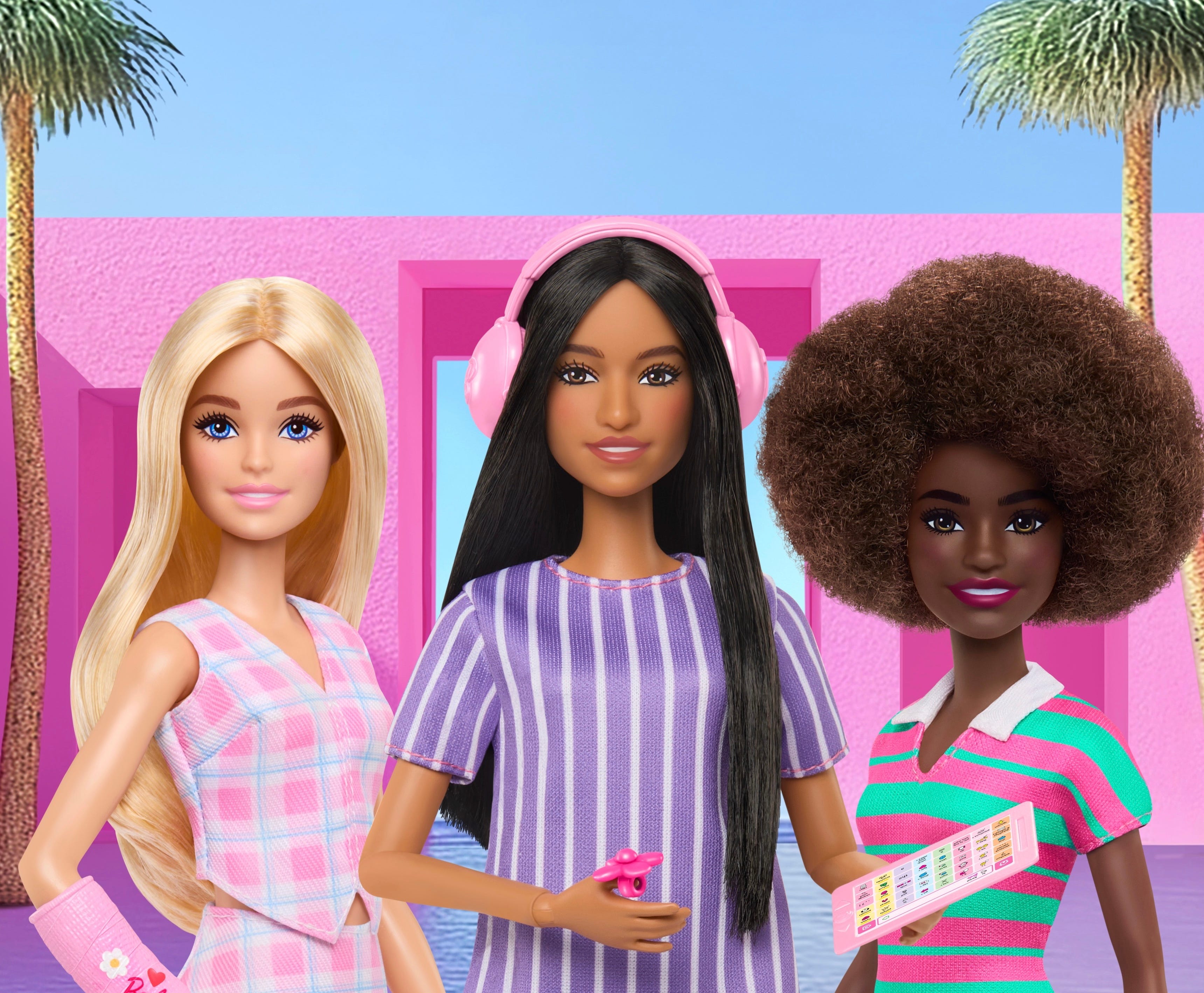
New 'Autistic' Barbie Spurs Debate
Plus: What happens when the first generation of I/DD adults outlives their parents?; New Jersey lawmakers create a task force on school bus safety in wake of disabled students' deaths

Medical Motherhood’s news round up
Snippets of news and opinion from outlets around the world. Click the links for the full story.
• From CBC News: “This Barbie is autistic. Some parents love her, but others say Mattel missed the mark”
[…]Toymaker Mattel unveiled its autistic Barbie on Monday, with an array of features that are meant to depict visual characteristics and accommodation accessories attributed to people on autism disorder spectrum — all of which were decided on after extensive consultations with the Autism Self Advocacy Network.
[…]It’s “so important and such a cultural moment” for people like Vancouver Island-based social media influencer Katherine L’Etang, the mother of two autistic children who was diagnosed herself later in life.
The 34-year-old is not alone in celebrating the arrival of a doll that shares similarities to her and her young daughter. But many others feel that Mattel missed the mark and that an autistic Barbie could serve to further stereotypes and misconceptions about a disability that is often invisible.
Comments on the Autism Self Advocacy Network’s Facebook page were mixed, with some suggesting that Mattel relied too heavily on having the Barbie “look” autistic and presenting a one-size-fits-all doll.
“You cannot tell by looking at someone whether they are autistic,” said Julie M. Green of Kingston, Ont. “In fact, you know, any Barbie could be autistic Barbie.”
Green is the the 49-year-old mother of a teenage boy who was diagnosed with autism as a child, but she also received her own diagnosis about five years ago.
[…]Green suggests it may have been "more inclusive" to have simply created a broader line of Barbie accessories that autistic children could use to customize the dolls in a way that represents themselves.[…]
• From The New Jersey Herald: “NJ wants to make school buses safer after disabled students' deaths”
Spurred by the deaths of a Morris County boy and other children with disabilities, state lawmakers have voted for a task force to study the school bus industry that transports thousands of special-education students in New Jersey.
[…]“Several tragic and preventable incidents involving vulnerable children with disabilities on school buses have underscored the need for reforms that will put the safety of New Jersey kids first,” one of the bill’s sponsors, Assemblyman Al Barlas, R-Essex, said in an announcement. “No student on their way to or from school should be harmed because of a lack of training, communication or accountability.”
[…]The group would make recommendations on training, staffing and certification standards for the state’s estimated 1,800 student transportation companies. It also would look at ways to improve communication with students’ families. Findings must be reported to lawmakers within a year, the announcement said.
[…]There have been a string of deaths and incidents involving medically fragile students on school buses.
[…]In February 2023, 19-year-old Matthew Rossi of East Hanover, who had muscular dystrophy, died after being found unresponsive after his bus ride home. A nurse who accompanied him on the bus pleaded guilty last year to endangering another person and neglect of a disabled person. He was sentenced to 90 days in prison and agreed to give up his license.
The Rossi family’s lawsuit and advocacy helped spur earlier legislation, including a 2025 Senate bill that required cameras and GPS tracking on school buses and mandated that staff make 911 calls during life-threatening emergencies.
[…]Matthew’s mother, Anabela Rossi, continues to lobby and has said existing policies fail to protect the “most vulnerable” students, referring to the 8,500 students with disabilities who are transported to out-of-district schools.[…]
• From The Minnesota Star-Tribune via DisabilityScoop: “As People With Disabilities Live Longer, Facilities Rework Services”
[…]More Minnesotans with developmental and intellectual disabilities are aging and need more involved care, leaving more to soon need group homes and other residential facilities as their families, who often care for them, also age. Yet, facilities are facing stagnant state and federal funding and a national crisis of staffing shortages.
While the majority of people with developmental or intellectual disabilities are cared for by their families, the average life span for people with those disabilities has increased from 66 years in 1950 to 78 years in 2007. And it keeps rising, thanks to medical advances and improved living conditions, said Tamar Heller, who directs the Rehabilitation Research and Training Center on Aging with Developmental Disabilities at the University of Illinois at Chicago.
The number of people with disabilities over the age of 60 is projected to nearly double from more than 650,000 in 2000 to 1.2 million by 2030, she said.
Yet with more than 25% of family care providers older than 60, those numbers indicate a seismic shift in caregiving is coming, Heller said, and more of them will soon need group homes and other residential facilities.
“There are already waiting lists (for facilities),” she said. “And if more families can’t do it, they’ll need help.”
The demographic trends illuminate an emerging need for facility staffing in the coming years, Heller said.
[…]While 10% to 20% of siblings assume the care of adults with disabilities after parents die, the need to start planning for an influx of older adults with disabilities into facilities “is now,” Heller said.
[…]“We are looking at the first generation of people with disabilities outliving their parents,” [group home director Jerry] LeVasseur said.[…]
Medical Motherhood brings you quality news and information each Sunday for raising disabled and neurodivergent children. Get it delivered to your inbox each week or give a gift subscription. Subscriptions are free, with optional tiers of support. Our paid subscribers make this work possible! Not ready to subscribe but like what you read here? Buy me a coffee.
Follow Medical Motherhood on Facebook, Bluesky, X, TikTok, Instagram or Pinterest. Visit the Medical Motherhood merchandise store.